How to Order Food in Portugal Without Speaking Portuguese: Cafes, Tascas, Seafood, and Essential Phrases
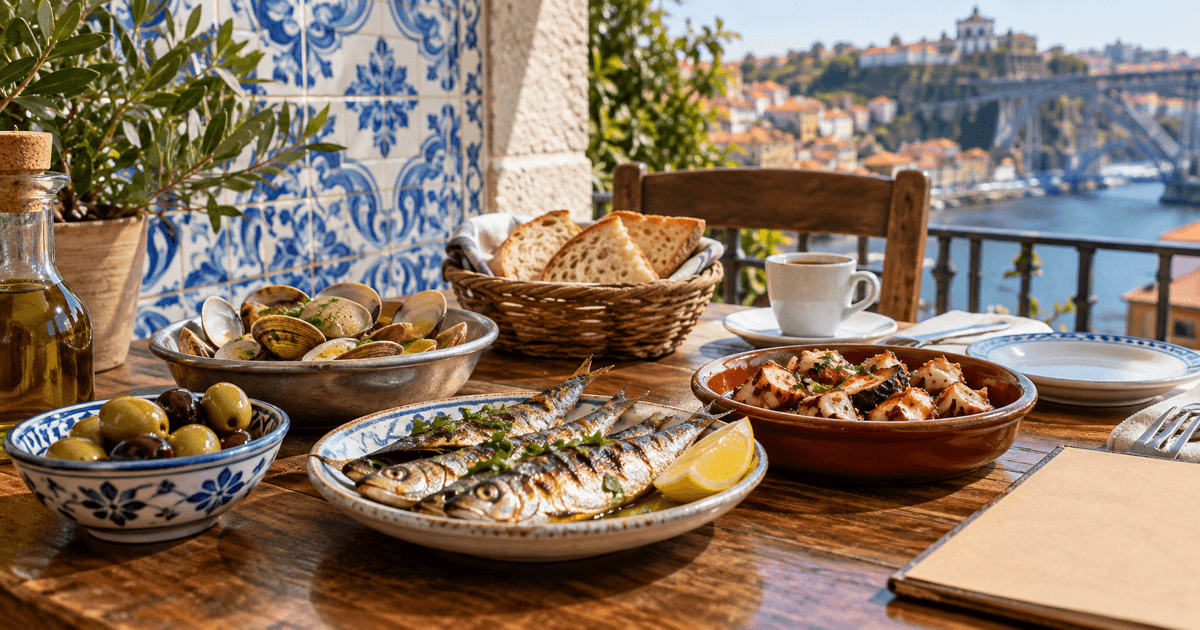
Yes, you can order food in Portugal without speaking Portuguese. The simplest approach is to learn a few European Portuguese phrases, recognize the type of place you are in, use photos or image translation for menus, keep a small cash backup, and write allergy or dietary needs in Portuguese before you order.
The mistake to avoid is treating every meal like a formal restaurant script. A Lisbon pastelaria, a Porto tasca, a beach seafood restaurant, a market counter, and a tourist-area cafe can all work differently. This guide gives you the phrases, menu words, payment checks, allergy backup, and offline plan you need before you sit down.
Can you order food in Portugal without speaking Portuguese?
Yes, especially in cities and tourist areas, but the smoothest meals come from handling three small moments clearly: greeting, choosing, and paying. Many people in hospitality speak some English, but a short Portuguese opening is still warmer and more useful than starting with a long translated paragraph.
| What you need | Best first method | Useful backup |
|---|---|---|
| Start politely | Say Bom dia, Boa tarde, or Boa noite |
Smile, point to the table/menu, and show the translated phrase |
| Understand the menu | Photograph the menu and translate dish names | Ask O que recomenda? and point to photos |
| Order clearly | Use Queria... por favor |
Point and say este, esta, or isto |
| Handle payment | Ask Posso pagar com cartão? before ordering |
Keep euros for small cafes, markets, and older card terminals |
| Explain allergies | Show a written allergy card in Portuguese | Ask for allergen information and choose a simpler dish |
Portugal rewards calm, polite ordering. You do not need perfect grammar; you need short requests that are easy for staff to confirm.
What should you prepare before eating out?
Prepare the parts that are hardest to improvise under pressure.
- Save your hotel address and emergency contact offline.
- Save a short Portuguese note for allergies, dietary restrictions, or religious food rules.
- Download Portuguese for offline translation if your tool supports it.
- Keep photos of the foods you want to try, especially if you are looking for seafood, pastries, or specific regional dishes.
- Carry a little cash even if you normally pay by card.
Visit Portugal notes that lunch is commonly around 12:00 to 2:30 p.m. and dinner around 7:30 to 10:30 p.m.; it also lists common restaurant price ranges and says service is included in restaurant bills, while an extra 5-10% tip is customary for good service. That means you usually do not need to calculate a mandatory tip, but you should still check the bill before paying.
How do you order in a Portuguese cafe or restaurant?
Use a small, repeatable workflow.
- Greet first:
Bom diain the morning,Boa tardein the afternoon, orBoa noitein the evening. - Ask for the menu:
A ementa, por favor. - If you are unsure, ask for a recommendation:
O que recomenda? - Order with
Queria... por favorplus the item name, or point and sayQueria isto, por favor. - Confirm anything important: meat, seafood weight, allergies, side dishes, or whether bread and olives are included.
- Ask for the bill:
A conta, por favor. - Ask about payment before the terminal appears:
Posso pagar com cartão?
In European Portuguese, queria is a natural polite ordering form. It literally uses the imperfect tense, but in restaurants it works like "I would like." If pronunciation is intimidating, say less and show more: point to one item, hold up fingers for quantity, and let the server repeat it back.
Which Portuguese phrases should you know?
Use Portugal Portuguese, not Brazilian-only phrasing, when you can. The pronunciation below is practical for English speakers, not a formal phonetic transcription.
| English intent | European Portuguese | Pronunciation help |
|---|---|---|
| Good morning | Bom dia | bom DEE-a |
| Good afternoon | Boa tarde | BO-a TAR-duh |
| Good evening / night | Boa noite | BO-a NOY-tuh |
| The menu, please | A ementa, por favor | ah eh-MEN-tah, por fah-VOR |
| I would like this, please | Queria isto, por favor | kuh-REE-ah EESH-too, por fah-VOR |
| What do you recommend? | O que recomenda? | oo kuh reh-ko-MEN-dah |
| Without... | Sem... | seng |
| I am vegetarian | Sou vegetariano / vegetariana | soh veh-zhuh-tuh-ree-AH-no / AH-nah |
| Does this have seafood? | Isto tem marisco? | EESH-too teng mah-REESH-koo |
| I am allergic to... | Sou alérgico / alérgica a... | soh ah-LER-zhee-koo / ah-LER-zhee-kah ah |
| The bill, please | A conta, por favor | ah KON-tah, por fah-VOR |
| Can I pay by card? | Posso pagar com cartão? | POH-soo pah-GAR kong kar-TAWNG |
| To take away | Para levar | PAH-rah luh-VAR |
Short phrases are safer than long machine-translated speeches. Say the phrase, show the written version, then let the server answer with a gesture, number, or short reply.
What menu words matter in Portugal?
Portuguese menus are often easier once you know the category words.
| Menu word | Meaning | Why it matters |
|---|---|---|
ementa |
menu | Common word for the menu |
prato do dia |
dish of the day | Often a practical lunch choice in a tasca or cafe |
entrada |
starter | Can include bread, olives, cheese, soup, or small plates |
couvert |
bread/olives/butter/cheese brought to the table | Usually not free; ask if you do not want it |
peixe |
fish | Often grilled or sold by portion; in seafood places, ask if priced by weight |
marisco |
seafood/shellfish | Important for allergies and seafood restaurants |
carne |
meat | Useful if choosing between fish and meat dishes |
sopa |
soup | Common, simple, and often useful when you want something plain |
sobremesa |
dessert | Includes cakes, puddings, fruit, and regional sweets |
café / bica |
espresso | In Lisbon, bica is a common cafe word for espresso |
Bread, olives, butter, cheese, or small plates may appear before you order. If you do not want them, say Não, obrigado/obrigada before eating them. If you are unsure whether something is included, ask Isto está incluído?
What changes in cafes, pastelarias, tascas, and seafood restaurants?
Cafe or pastelaria: Order at the counter if the place is busy or looks counter-service. For coffee, um café, por favor usually means an espresso. For pastries, point and say queria este, por favor.
Tasca or simple lunch restaurant: Look for prato do dia, soup, grilled fish, meat, and house-style sides. These places may be more local and less English-heavy, so pointing and short phrases work well.
Seafood restaurant or marisqueira: Ask how the seafood is priced before you order, especially for fish, crab, lobster, or prawns. Use: E por peso? meaning "Is it by weight?" If the answer matters, have the server write the estimated price.
Market counter: Pointing is normal. Ask for quantity with fingers or say um, dois, tres. Markets and small counters are good places to use photos and cash.
Tourist-area restaurant: English may be available, but do not skip the basics. Confirm whether the displayed menu, service, and payment method match what you expect.
How do payments, cards, tips, and receipts work?
Cards are common in Portugal, but not every merchant is required to accept them. Banco de Portugal says merchants are not obliged to accept payment cards, and if they do accept cards they must clearly inform customers which brands or card types they accept. Multibanco also notes that euro notes and coins are the payment form that cannot be refused.
Use this simple script:
- Before ordering in a small place, ask
Posso pagar com cartão? - If the server points to a terminal or card logo, pay normally.
- If the answer is no, ask for the nearest
Multibancoor choose a simpler cash order. - Ask for the bill with
A conta, por favor. - Check the bill for
couvert, drinks, and any seafood-by-weight item before paying.
Tipping is not the same as in the United States. Service is included, and Visit Portugal describes an extra 5-10% tip as customary rather than mandatory. For a simple coffee or pastry, rounding up or leaving small change is enough if you want to tip.
How do you handle allergies or dietary restrictions?
Treat allergies as safety information, not casual translation. EU rules require allergen information for non-prepacked foods such as restaurant, cafe, and deli-counter foods, and Portugal's DGAV says allergen information must be provided to consumers, including for non-prepacked foods. Still, a busy server may not understand the severity of your allergy from a spoken sentence alone.
Use a written Portuguese card like this:
Tenho uma alergia grave a [allergen]. A minha comida não pode conter [allergen] nem ter contacto com [allergen]. Pode confirmar com a cozinha antes de eu pedir?
That means: "I have a severe allergy to [allergen]. My food cannot contain [allergen] or have contact with [allergen]. Can you confirm with the kitchen before I order?"
Useful allergen words:
| English | Portuguese |
|---|---|
| peanuts | amendoim |
| tree nuts | frutos secos |
| milk | leite |
| egg | ovo |
| wheat / gluten | trigo / gluten |
| fish | pescado |
| shellfish / seafood | marisco |
| soy | soja |
| sesame | sesamo |
| mustard | mostarda |
For severe allergies, choose simple dishes, avoid unclear sauces and fried shared-oil foods, and leave if the restaurant cannot confirm. Leyo or any translation tool can help you make the message clear, but it cannot certify kitchen safety.
What if you do not understand the response?
Do not pretend you understood. Slow the interaction down.
- Ask the server to point:
Pode mostrar? - Ask for repetition:
Pode repetir, por favor? - Show the translated question on your phone.
- Ask for the answer as yes/no:
Sim ou não? - Ask the server to write the number or price.
- Take a photo of the menu line and translate that one item, not the whole menu.
If the response still feels unclear and the stakes are low, choose a simpler dish. If the stakes are high, such as allergy, medication, alcohol, legal age, or payment dispute, stop and use an official or qualified human source.
Which translation mode works best?
Image translation is best for menus, chalkboards, allergen charts, and receipts. Photograph only what you need so the translation is less noisy.
Typed translation is best for allergies, dietary rules, and payment questions. It creates a clear phrase you can show again.
Voice or live conversation is best when the server is explaining a special, reservation issue, or problem with the bill.
Offline notes are best when your phone signal is weak or the restaurant is too loud. Keep your allergy card, hotel address, and a few phrases in screenshots.
What if your phone or connection fails?
Use an analog backup.
- Keep a paper or screenshot phrase card with your top five phrases.
- Save your allergy or dietary note in Portuguese.
- Carry cash for small cafes and markets.
- Keep your hotel address written down.
- Photograph the menu and receipt while you still have battery.
- Memorize
A conta, por favorandPosso pagar com cartão? - In a real emergency in Portugal, call 112. Visit Portugal and gov.pt both list 112 as the emergency number.
The goal is not to be phone-free. The goal is to avoid being helpless if the phone is slow, dead, or awkward to use.
Quick checklist for ordering food in Portugal
Before:
- Save Portuguese phrases and allergy notes offline.
- Check whether your card works internationally and carry some euros.
- Learn the difference between
ementa,prato do dia,couvert,peixe, andmarisco.
During:
- Greet first.
- Order with
Queria... por favor. - Ask
E por peso?for seafood that may be priced by weight. - Ask
Posso pagar com cartão?before relying on card payment. - Confirm allergies in writing.
After:
- Check the bill before paying.
- Save useful phrases you actually used.
- If Leyo helped you understand a menu or phrase, keep the phrase for the next meal instead of starting from zero.
Where does Leyo fit?
Leyo helps most when the moment is practical and human: reading a menu photo, understanding a phrase, checking pronunciation, and turning a short English request into natural Portuguese before you show it to a server. Leyo Translate is especially useful for phrase breakdowns and pronunciation, while image understanding helps with menus, signs, receipts, and allergen charts.
Use Leyo for clarity, not for pretending risk has disappeared. For severe allergies, medical needs, payment disputes, or emergencies, use Leyo to communicate clearly and then rely on restaurant staff, official rules, or emergency services.
Frequently asked questions
Is it rude to speak English in restaurants in Portugal?
It is not rude to use English, especially in tourist areas, but it is warmer to greet in Portuguese first. A simple Bom dia or Boa tarde changes the tone of the interaction. If you need English, ask politely: Fala ingles?
Should I say menu or ementa in Portugal?
A ementa, por favor is a safe Portugal-specific way to ask for the menu. People will also understand menu in many places, but ementa fits local restaurant Portuguese better.
Is queria polite in Portugal?
Yes. Queria... por favor is a common polite way to order in Portugal. You can use it with the dish name or with pointing: Queria isto, por favor.
Do restaurants in Portugal accept cards?
Many do, but not all are required to. Ask Posso pagar com cartão? before ordering in smaller cafes, markets, or family-run restaurants. Carry some euros as a backup.
Is tipping required in Portugal?
No. Service is generally included in the restaurant bill, and extra tipping is optional. Visit Portugal describes 5-10% as customary for good service, but small change or rounding up is often enough in casual places.
What should I do if I have a serious food allergy?
Write the allergy in Portuguese before you arrive, show it to staff, and ask them to confirm with the kitchen. EU and Portuguese sources require allergen information to be available, but you should still choose simple dishes and leave if staff cannot confirm safely. Do not rely on live translation alone for severe allergies.
What is the safest food-ordering phrase to memorize?
Memorize Queria isto, por favor for "I would like this, please" and A conta, por favor for "The bill, please." With those two phrases, pointing, and a saved allergy note if needed, you can handle many ordinary meals.
The bottom line
You can order food in Portugal without speaking Portuguese if you keep the interaction short, polite, and specific. Learn a few European Portuguese phrases, understand the local restaurant types, ask about card payment early, treat allergies as written safety information, and keep an offline backup. That combination lets you enjoy the meal instead of wrestling with every word.