How to Host a Webinar for a Multilingual Audience (Checklist + Follow-Up Plan)
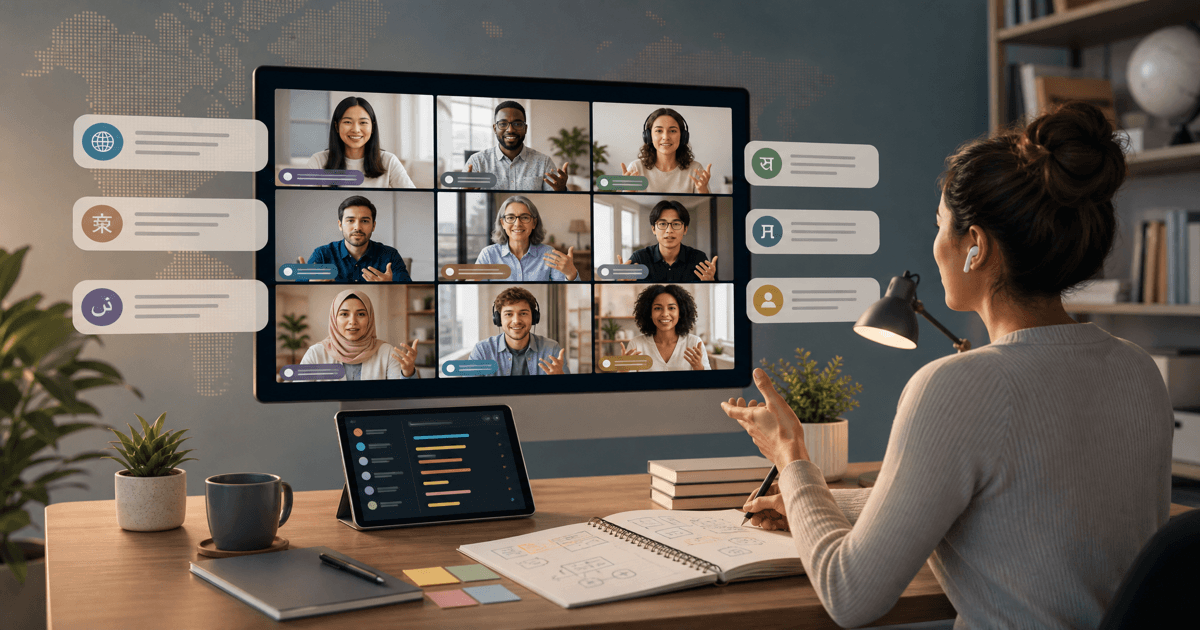
If your webinar audience speaks more than one language, the goal is not just "translate the slides." A good multilingual webinar needs clear pacing, repeated context, visible takeaways, and a follow-up record people can trust after the call.
Here is the simple version: design the webinar around comprehension, not speed. Share the important terms early, make every decision and action item explicit, give people more than one way to ask questions, and send a post-webinar recap that preserves the original meaning instead of only summarizing in one language.
The main risks in a multilingual webinar
Most multilingual webinars fail for predictable reasons:
- The speaker talks too fast for live captions or interpreters to keep up.
- Product names, acronyms, and industry terms are never defined.
- Q&A favors the fastest speakers, not the clearest questions.
- Follow-up notes lose nuance, especially around objections, pricing, next steps, or cultural context.
- Attendees leave with different interpretations of what was promised.
You can avoid most of this with a small amount of preparation.
Before the webinar: prepare the language layer
Start with a language map. You do not need a perfect census, but you should know the main languages in the audience, which language the speaker will use, and which parts of the session require exact wording.
Create a short glossary before the event. Include:
- Product names and feature names
- Technical terms
- Pricing or contract terms
- Acronyms
- Words that are easy to mistranslate
- Names of teams, regions, or customer segments
For each term, write one plain-language definition. If possible, include accepted translations for the languages you expect in the room. This helps captions, interpreters, AI summaries, and human note-takers stay consistent.
Also prepare a one-page agenda with timestamps. Multilingual audiences benefit from knowing where they are in the session because they may need a few extra seconds to process captions, translated chat messages, or interpreted audio.
During the webinar: slow down without losing energy
You do not need to make the webinar feel stiff. You do need to make it easy to follow.
Use these speaking habits:
- Pause after important claims.
- Say numbers twice when they matter.
- Avoid idioms unless you explain them.
- Repeat the question before answering it.
- Put the key takeaway on screen after each section.
- Name the next step out loud, not only in chat.
For example, instead of saying, "This is a no-brainer for distributed teams," say, "This is especially useful for teams working across countries because everyone can review the same notes after the meeting."
That small change makes the meaning easier to translate and easier to remember.
Make Q&A fair across languages
Q&A is where multilingual webinars often become uneven. People who are reading captions, translating their own question, or checking wording may need longer to participate.
Use a structured Q&A flow:
- Ask attendees to submit questions in their preferred language.
- Group similar questions before answering.
- Read each question in the webinar's main language.
- Answer in short sections.
- Capture the answer as a written takeaway.
If you have a moderator, ask them to watch for questions that are being ignored because they are not written in the dominant language. Those questions are often the highest-value signals because they show where your message is unclear.
After the webinar: send more than a recording
A recording is useful, but it is not enough. Multilingual attendees often need a clean written recap they can share with their team, manager, spouse, client, or local office.
Send a follow-up that includes:
- The main points in plain language
- A glossary of important terms
- Questions asked during the session
- Decisions or commitments made
- Action items with owners and deadlines
- Links to slides, recording, and resources
- A way to ask follow-up questions in another language
If the webinar was for sales, customer education, recruiting, investor relations, or a community launch, the follow-up is where trust is built. People may not remember every slide, but they will remember whether the recap respected what they asked.
A practical checklist
Use this checklist before your next multilingual webinar.
Planning
- Choose the webinar's primary language.
- Identify the audience's likely secondary languages.
- Decide whether you need live interpretation, translated chat, captions, or post-event translation.
- Build a glossary of key terms.
- Rewrite slide titles so they are simple and literal.
- Add one takeaway slide after each major section.
Delivery
- Speak slightly slower than normal.
- Pause after numbers, deadlines, and commitments.
- Avoid jokes or idioms that depend on local context.
- Repeat audience questions before answering.
- Summarize each answer in one sentence.
- Give attendees time to write questions in their own language.
Follow-up
- Send a written recap within 24 hours.
- Include action items and owners.
- Include a glossary for important terms.
- Translate the most important takeaways when needed.
- Save questions and objections for future follow-up.
- Keep the meeting memory somewhere your team can reuse it.
Where Leyo fits
Leyo is built for communication across languages and cultures, not just one-off translation. For multilingual webinars, Leyo Meet can help teams keep live conversation, captions, notes, and follow-ups connected in one shared memory.
That matters because the hard part is not only understanding the webinar while it is happening. The hard part is remembering what was said, what people asked, and what should happen next across languages, time zones, and relationships.
With Leyo, a global team can host the conversation, capture multilingual context, preserve follow-up items, and continue the relationship afterward through cross-language chat. The webinar becomes part of an ongoing relationship instead of a recording that disappears into someone's inbox.
Bottom line
To host a good webinar for a multilingual audience, make the message easy to process before, during, and after the session. Prepare a glossary, slow down at the right moments, structure Q&A, and send a recap that people can act on.
Translation helps people understand the words. Shared meeting memory helps people keep the meaning.