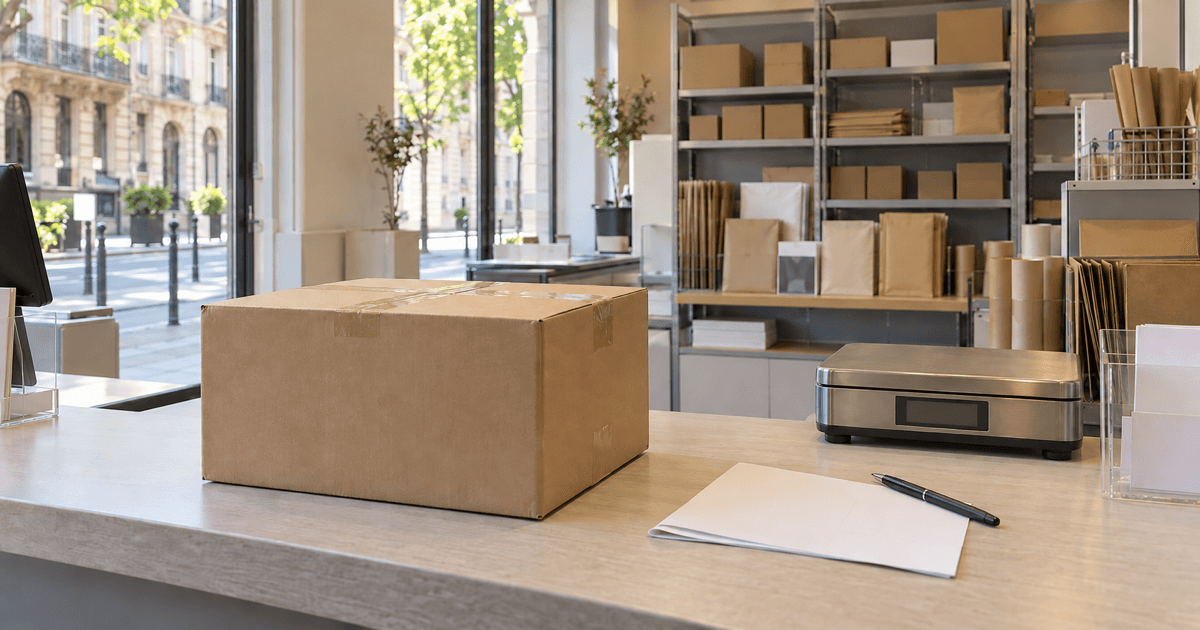
To send a parcel from France without French, bring the recipient's complete address, a clear list of the contents, and the items' values to a La Poste office. Show the destination in writing, confirm that the contents are accepted, and ask which postage and customs steps apply before paying. Keep the proof of posting and tracking number after the parcel is accepted; buying a label alone does not mean you have sent it.
For a traveler mailing souvenirs or spare clothes home, the difficult part is often understanding what the clerk needs next. This guide focuses on sending an ordinary personal parcel from metropolitan France through La Poste. It is not a procedure for commercial exports, restricted goods, or every carrier operating in France.
What should you check before packing the parcel?
Check the exact destination and contents first. A product you bought legally in a shop is not automatically permitted in a postal parcel.
Destination notice checked November 2, 2026: La Poste currently says that certain goods, including clothing, toys, electronics, and other listed categories, are temporarily suspended through its consumer Colissimo services to the United States and Puerto Rico. Its notice dates the suspension from September 17, 2026. Check the live US shipping guidance before buying postage; do not assume a parcel of your own clothes is accepted because it is not a sale.
For any destination, use this first check:
| What you want to send | What to establish before paying | Useful information to show |
|---|---|---|
| Books or ordinary souvenirs | Acceptance for the destination and chosen service | Item names, quantities, and values |
| Clothes sent home | Current destination restrictions and the correct customs category | What the clothes are, whether used, and their values |
| Cosmetics, perfume, or aerosols | Whether the exact product is prohibited | Original packaging and composition information |
| An electronic item | Battery and destination restrictions | Product model and battery details |
| Food, plants, or medicine | Carrier rules and destination import requirements | Exact product details; get specialist or official advice where needed |
La Poste's prohibited-content guidance directs senders to both carrier and destination rules. Its cosmetics guidance specifically lists perfume, nail polish, removers, and cosmetic aerosols as prohibited. Do not conceal an item under a vague description such as “souvenirs.”
What information should you take to the post office?
Make a small parcel note before joining the queue. Keep the recipient's address exactly as they supplied it rather than translating street names or guessing the postal code.
Include:
- Recipient name, full delivery address, postal code, and destination country.
- Recipient contact details where requested by the service.
- Your name, contact details, and proposed sender or return address.
- An itemized contents list, quantities, values, and currency.
- Purchase receipts or other supporting information you have.
- Any delivery deadline, written as a date rather than “next Friday.”
If you are staying at a hotel, ask La Poste which sender or return address is suitable for your shipment. Do not use the hotel's address without its agreement or assume it will handle a returned parcel after you leave.
Photograph your contents list and keep a paper copy. A handwritten list is useful for explaining the parcel, but it does not replace an electronic customs declaration when one is required.
Use La Poste's office locator to check the branch and its services. Its filters distinguish parcel deposit from parcel collection and identify self-service equipment. A nearby pickup point is not automatically the right place to buy postage or resolve a customs question.
Which French words and phrases will you need?
A short polite opening and a written destination are enough to begin. These phrases suit an ordinary service-counter interaction in France.
| What you mean | French | Approximate pronunciation |
|---|---|---|
| Hello | Bonjour. | bohn-ZHOOR |
| I would like to send a parcel | Je voudrais envoyer un colis. | zhuh voo-DREH ahn-vwah-YAY uhn koh-LEE |
| How much does it cost? | Combien ça coûte ? | kohm-BYEHN sah KOOT |
The request and price question are checked against this French postal-counter language lesson. The conditional form je voudrais makes a polite request. Pronunciation cues are approximations: the nasal vowels represented here by “ahn,” “uhn,” and “yehn” do not end with a fully pronounced English n. In colis, the final s is silent. Dictionary pronunciations for envoyer and combien help with the harder sounds.
Recognizing form labels is just as useful as speaking:
| Label | Meaning in this situation |
|---|---|
| Expéditeur | Sender |
| Destinataire | Recipient |
| Affranchissement | Postage payment |
| Étiquette / bordereau d'expédition | Shipping label / dispatch document |
| Déclaration en douane | Customs declaration |
| Suivi / numéro de suivi | Tracking / tracking number |
| Preuve de dépôt | Proof that the parcel was handed over and accepted |
Keep the address and numbers visible separately from any translated message. For a longer question, prepare plain English first:
I want to send this parcel to this address. These are the contents. Is this service available for them?
Then ask one follow-up at a time. Showing the box, contents note, and destination together gives the clerk something concrete to check.
How do you handle the counter conversation?
Treat the visit as a sequence of decisions rather than one long translated speech.
- Show the destination and contents. Establish that the items and route are accepted before choosing packaging or paying.
- Confirm packaging and the finished parcel's measurements. Ask whether your box is suitable. If buying packaging, establish whether its price includes postage for your destination or only the box.
- Compare the relevant services. Ask for the total price and what tracking, delivery method, and compensation terms come with each option.
- Complete the required information. Review names, addresses, contents, values, and any declaration before confirming it.
- Hand over the parcel through the instructed channel. Ask how to obtain its proof of posting and check the tracking number before leaving.
Useful short follow-up messages to translate are:
Please write the total price here.
Does that include the packaging and postage?
Is that delivery date an estimate or a guarantee for this service?
Which step do I need to complete before you can accept the parcel?
Do not answer “yes” to a choice you did not understand. Point to the option and ask the clerk to show the difference in writing. Greet the person, keep your request focused, and move aside to complete a long form when staff direct you to do so.
Can you buy postage online if you have no printer?
Sometimes, but check the printing option for the exact shipment before paying. A mobile confirmation, printable label, and customs paperwork are different things.
La Poste's post-office label-printing guide describes free self-service printing for Colissimo shipments to metropolitan France and the EU, using a collection code or parcel number. Save the confirmation and code if that option is offered. Check that your chosen office has the relevant equipment.
For a parcel requiring customs documents, use the instructions generated for that shipment and check printing arrangements with the office. Do not assume that printing one adhesive label also produces every customs page you need.
If an online payment or printing step fails, show the order confirmation before buying another label. Ask whether the existing purchase can be used or corrected. Do not repeatedly pay while trying to solve a language problem.
When do you need a customs declaration?
For goods sent from metropolitan France outside the EU or to French overseas departments, customs formalities apply, including when goods are sent free of charge. French Customs explains the requirements in its personal-parcel guidance. The appropriate documents depend on the shipment; ask which process applies rather than selecting a form from an old travel post.
“Europe” does not mean “EU.” A destination such as Switzerland or Great Britain needs a different check from an ordinary intra-EU shipment. Special territories also need individual checking.
La Poste's customs preparation instructions require applicable declarations to be completed electronically, then printed and attached before dispatch. Its international sending page explains that the online Colissimo purchase flow includes the customs declaration for international parcels.
Prepare detailed item descriptions, quantities, weights, values, and other requested fields. For example, an actual contents list of “two cotton T-shirts” is clearer than “personal stuff.” Give accurate information; do not change the value or call a sale a gift to seek different treatment.
Customs and charges need official confirmation. Translation can explain a field, but it cannot decide whether an item is admissible, assign an authoritative commodity classification, or guarantee tax treatment. Ask the carrier or relevant customs authority if you cannot answer a required field. Postage payment alone is not proof that every destination charge is covered.
What should you keep after handing over the parcel?
Keep the proof of posting, tracking number, payment record, and copies of the information submitted. Photograph the final address label for your own records, taking care not to share personal addresses publicly.
La Poste says its proof of posting establishes that it has taken charge of the parcel and is needed for customer-service requests. A label printed in advance is not the same evidence.
Before leaving the counter, check that the number on your proof matches the parcel you are sending. Send the recipient the tracking number and the delivery address you used, and explain any information they may need to provide later.
If tracking raises a question, use the official carrier channel and describe the latest status exactly. Keep a screenshot with its date. Do not translate “label created” into “already in transit,” or assume a customs-related message means the parcel is lost.
What changes for souvenirs, returns, or a departure-day visit?
A mixed souvenir box: make an inventory before sealing it. Check each item individually, especially cosmetics, food, or electronics. Permission for the books in the box does not establish permission for everything else.
A retailer return: obtain the seller's return instructions first. Confirm the address, carrier, reference number, and any authorization. An independently purchased label may not satisfy the retailer's return process.
Used clothes sent home: describe them accurately and check current acceptance for the destination. Do not assume that “personal belongings” removes customs requirements or overrides a service suspension.
A parcel that must arrive by a particular date: give the clerk that date and ask what the offered service actually commits to. Leave room for customs and recipient-side requirements rather than turning a general transit estimate into a promise.
Your last morning in France: check the office hours and dispatch cutoff before traveling there. If the contents or paperwork are unresolved, do not rush through a declaration just to leave with the box off your hands.
What is the backup if your phone or French fails?
Carry the printed address, item list, values, and one short request. Write your deadline and budget separately so they remain clear when a translation is awkward.
Save the relevant carrier instructions and confirm that the saved copies open without a connection. This is an offline reference plan, not a promise that Leyo or another translation tool works offline.
If the conversation stalls, ask the clerk to point to the missing field or write the next step. You can return with completed information. A successful visit ends with a correctly accepted parcel and usable records, not simply an empty-handed walk out of the office.
Where does Leyo help?
Use Leyo Translate to prepare a short counter question and understand its wording, pronunciation, and context. Leyo's image understanding can help you explore text on a sign or form; photograph the surrounding instructions as well as the unfamiliar field.
Check names, addresses, amounts, and parcel numbers against the originals. Use the official shipment flow for declarations and payments, and ask La Poste or customs about acceptance and legal requirements. Leyo can help you understand the conversation while the carrier confirms what it can send.
Frequently asked questions
Can I send a parcel from France without speaking French?
Yes. Bring the destination address and an itemized contents note, use a short polite request, and ask for the next step in writing when needed. Confirm acceptance and paperwork before paying.
Can La Poste print my shipping label?
Its published self-service guide covers eligible Colissimo labels for metropolitan France and the EU. Check your purchase's printing option, the office equipment, and any separate customs documents before relying on it.
Can I mail perfume home from France?
La Poste's consumer cosmetics guidance lists perfume among prohibited products. Check the exact contents and current carrier rules before packing; a small bottle or gift description does not establish permission.
Does marking a parcel as a gift avoid customs paperwork?
No. French Customs says goods sent outside the EU or to French overseas departments require declarations even when sent free of charge. Applicable charges and exemptions depend on the destination and shipment.
Can I send clothes from France to the United States?
Check the current service notice first. As checked November 2, 2026, La Poste lists clothing among categories temporarily suspended through consumer Colissimo services to the US and Puerto Rico. Do not buy postage on the assumption that personal clothes are exempt.
Is buying a label the same as posting the parcel?
No. Complete the required preparation and handover, then keep proof that the carrier accepted it. Keep that proof and the tracking number until the parcel has arrived and any issue is resolved.